
Services · Siding
Siding in Philadelphia, PA
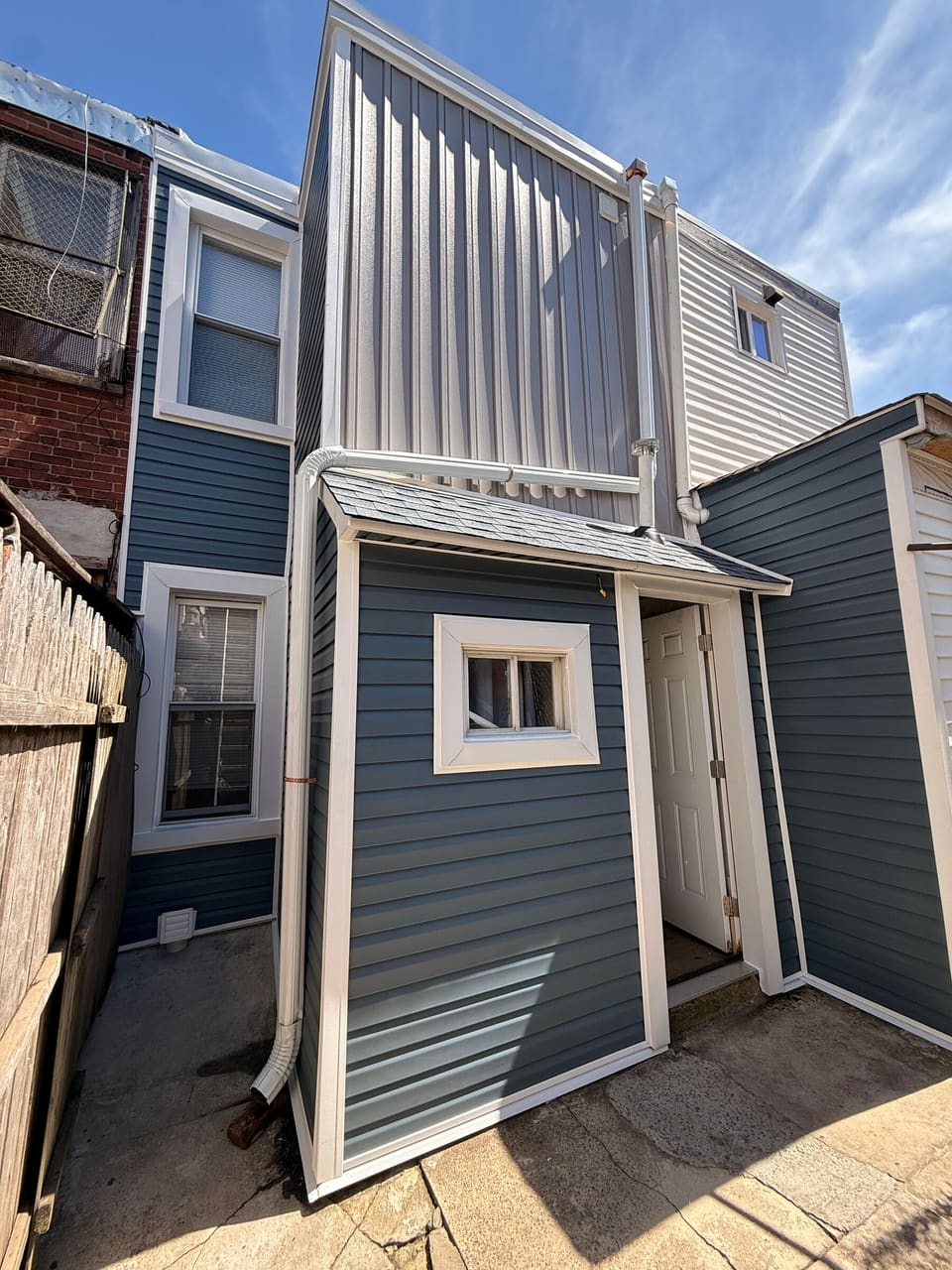
New siding installation and repair, including the connecting walls and rear addition walls that often get skipped when a roof goes on.
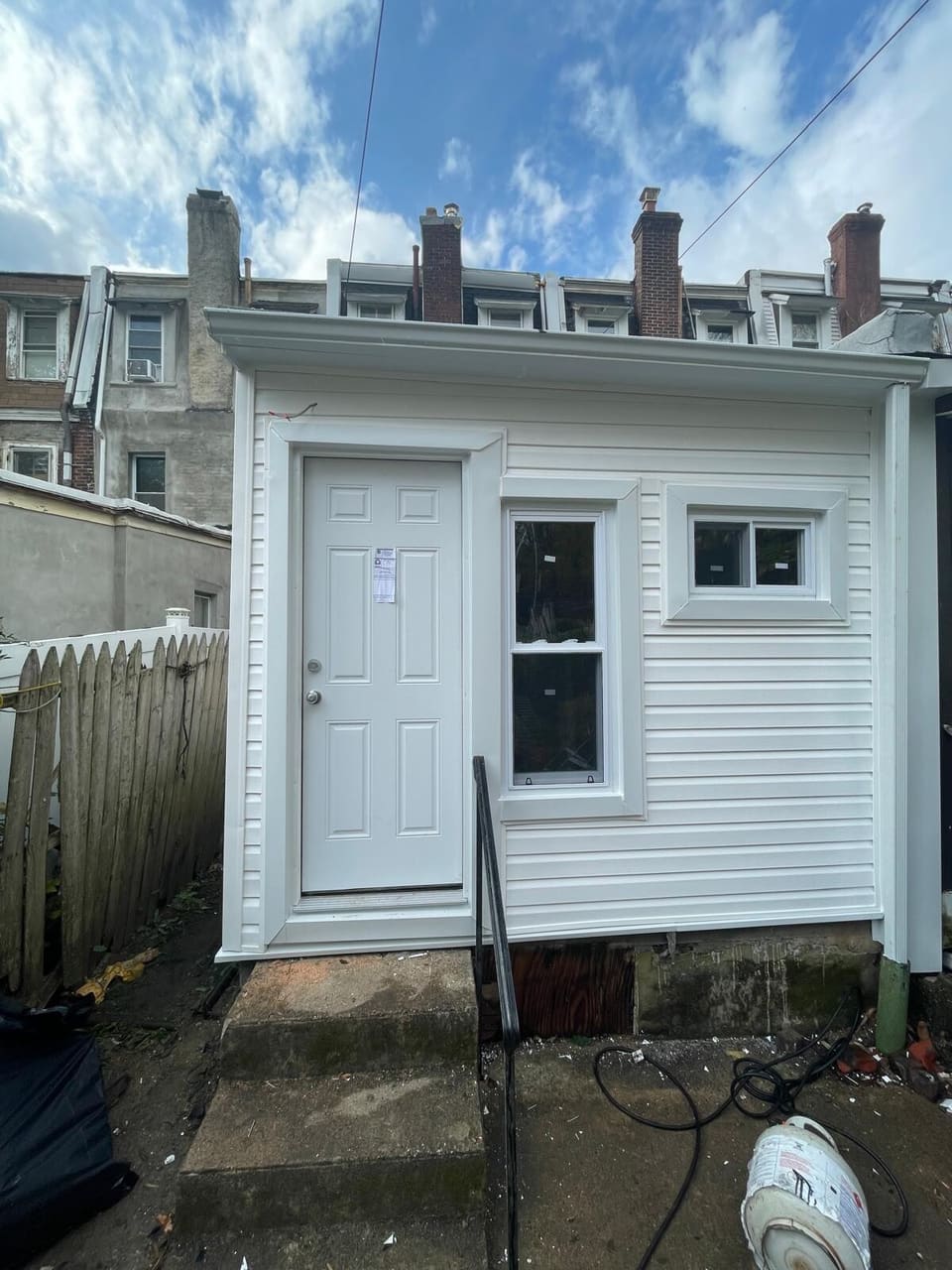
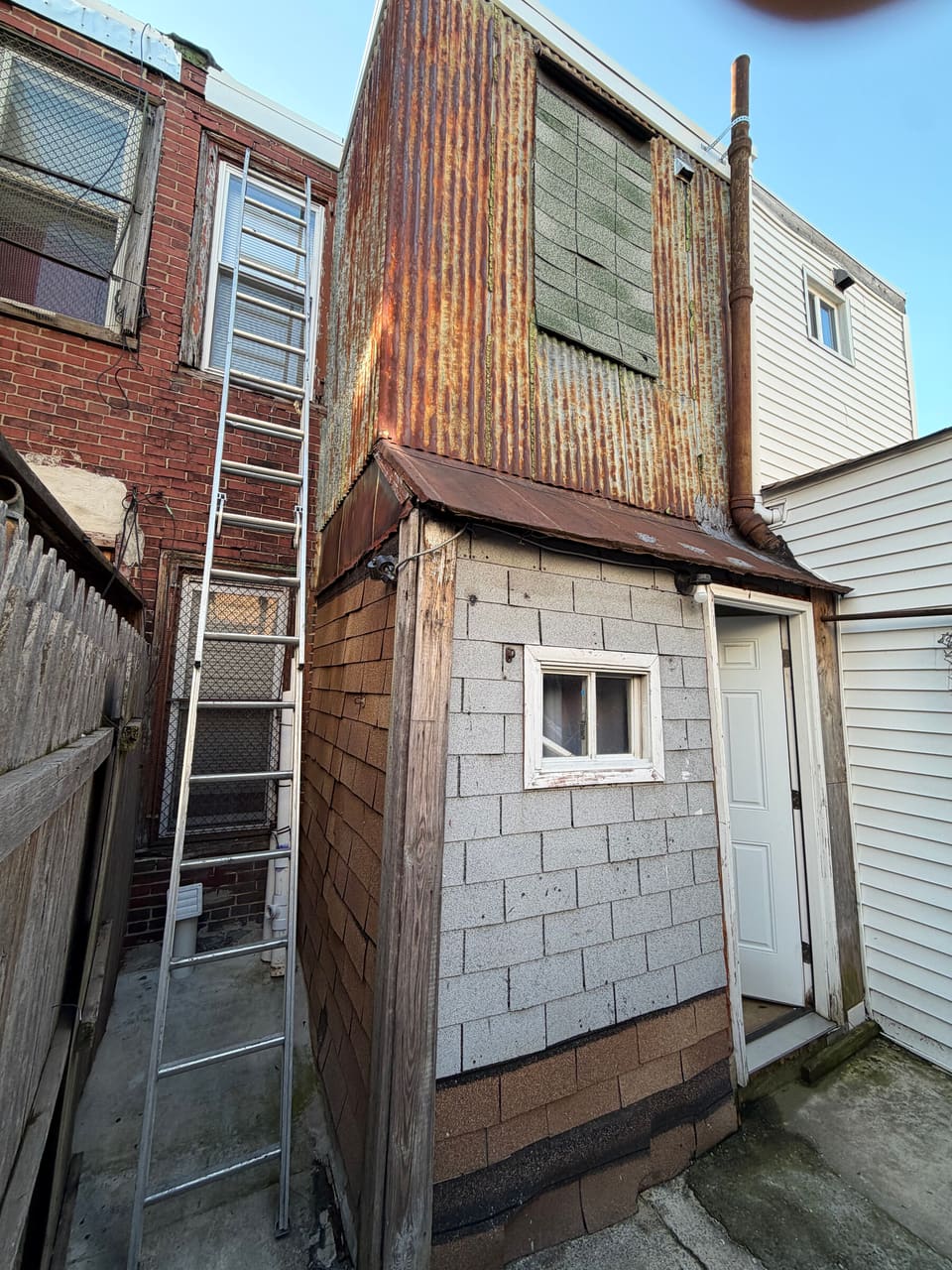
Siding work on a row home almost always includes at least one wall the roofers never touched, the connecting wall facing the driveway or side alley, or the rear wall over an addition. When a roof goes on but the siding underneath it gets ignored, you end up with new roofing sitting above old, cracked siding that is still letting water track behind it.
The job starts with stripping the old siding down to the sheathing so we can see what is actually happening underneath, since soft or dark wood there means moisture has been getting in for a while. New house wrap goes on before anything else, then the siding itself, then trim around windows, corners, and the edges where it meets the roofline or a neighbor's wall.
Vinyl is the common choice and holds up fine if it is installed with room to expand and contract with temperature swings, which Philadelphia gets plenty of between winter and summer. Fiber cement costs more and holds paint better over time but needs to be installed and sealed correctly at every joint, since it does not forgive a shortcut the way vinyl sometimes does.
How it goes
Siding, step by step.
- 01
Inspection
Check current siding, look for soft spots, and see how it ties into the roof edge and neighboring walls.
- 02
Strip old siding
Remove down to the sheathing so hidden rot or moisture damage gets found before it is covered again.
- 03
Sheathing repair
Replace any damaged sheathing before wrap and siding go back on.
- 04
House wrap
Install a continuous moisture barrier as the layer between the wall and the new siding.
- 05
Siding install
Hang new siding with room to expand and contract, working around windows, corners and connecting walls.
- 06
Trim and flashing
Finish trim, corners and the flashing where siding meets the roof or the party wall.
Photos
Siding jobs.
All of them our own jobs. Tap a photo to see it full size.
From the drone
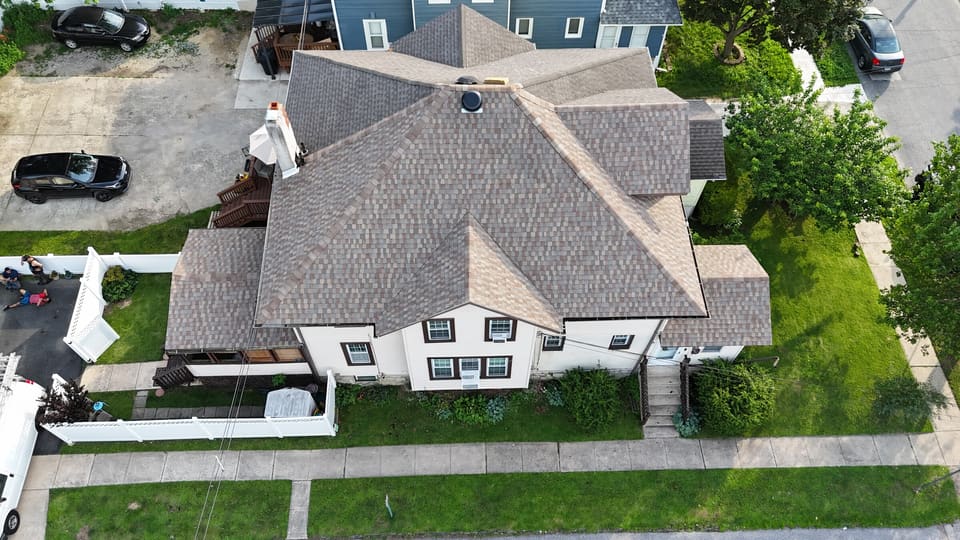
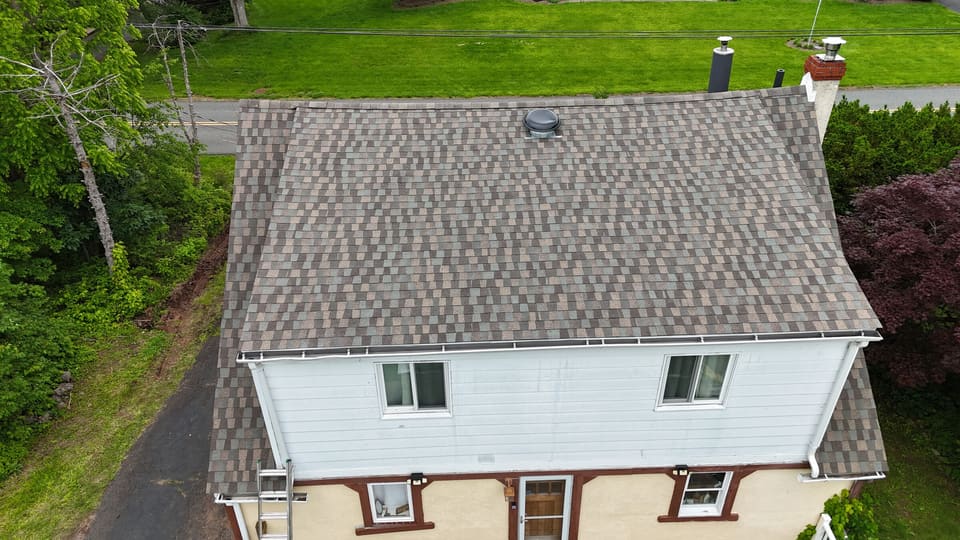
The same roof, before and after.
We put the drone up before we start and again when we finish, and you get the pictures. Drag across to see what changed.
FAQ
Siding questions.
Why does my siding look fine but feel soft when I press on it?
That usually means moisture has been getting behind it for a while, often from a gap at the top where it meets the roof or a window that was never flashed right. The surface can look intact while the sheathing behind it is already rotting, which is why we check by hand and not just by eye.
Does the connecting wall between my house and my neighbor's need siding too?
Yes, and it is the wall most likely to get skipped, since it faces the alley or the driveway rather than the street. If your roof was replaced without touching that wall, water can still be getting behind old siding there even though the roof itself is fine.
Vinyl or fiber cement, which one should I pick?
Vinyl costs less up front and is easy to repair in sections if something gets damaged later. Fiber cement holds paint and color better over years of Philadelphia weather but costs more and needs to be installed carefully at every seam, since it does not hide a bad install the way vinyl does.
Can you match new siding to what's already on my rear addition?
Usually, yes, as long as the existing siding is a common profile and color. We bring samples and match as close as we can, though sun fading on older siding means an exact match is not always possible.
Free estimate
Get a free siding estimate.
Tell us what is going on with the roof, the siding or the gutters. We come out, look at it, and give you the scope, the timeline and the price in writing before anything starts.
We work in English and Spanish